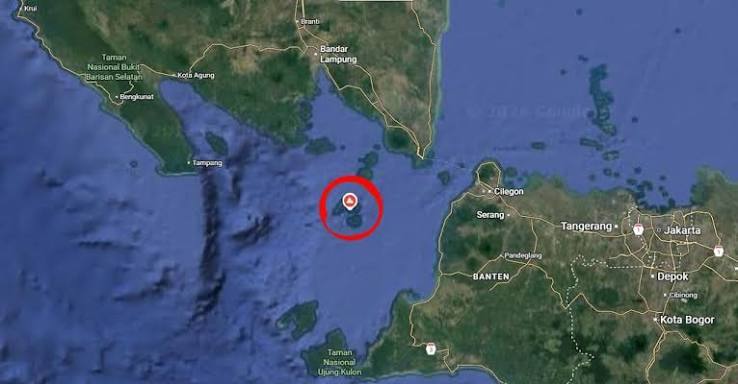
Sunda Strait, Indonesia • Famous for the catastrophic 1883 eruption—one of the loudest and most destructive events in recorded human history.
Volcanic Explosivity Index
VEI-6
(Colossal Eruption)
3,000 mi
Sound Heard Radius
120 ft
Max Tsunami Height
1.2 °C
Global Temp Drop
36,000+
Estimated Fatalities
Interactive Timeline
Filter key volcanic events through time
416 AD / 535 ADAncient Collapse
The Ancient Super-Eruption
Early Javanese historical texts (Book of Kings) describe a massive volcanic event that shattered the island of Krakatoa, creating the caldera between Sumatra and Java.
May 20, 1883Activity Begins
The Awakening of Perboewatan
Vents began emitting massive ash clouds and steam columns visible up to 6 miles high, signaling the end of 200 years of dormancy.
August 26-27, 1883VEI-6 Cataclysm
The Great Paroxysm
Four colossal explosions destroyed two-thirds of the island. The final blast at 10:02 AM was heard 3,000 miles away in Mauritius. Generated catastrophic 120ft tsunamis across the Sunda Strait.
December 29, 1927New Volcanic Island
Birth of "Anak Krakatau"
Submarine eruptions produced a new volcanic island named Anak Krakatau ("Child of Krakatoa"). It grew rapidly by several meters each year due to continuous lava flows.
December 22, 2018Flank Collapse
Flank Collapse & Tsunami
A major eruption caused over two-thirds of Anak Krakatau's height to collapse into the sea, triggering a deadly tsunami in coastal Banten and Lampung.
The Physics of VEI 6
The 1883 eruption is classified as a VEI 6 (Volcanic Explosivity Index). It discharged more than 25 cubic kilometers of rock, ash, and pumice into the atmosphere.
Hot basaltic magma mixed with cooler dacitic magma chamber, building immense pressure until the overlaying caldera crust fractured violently.
As seawater poured into the collapsing magma chamber, phreatomagmatic explosions produced super-heated steam and destructive pyroclastic surges over water.
Worldwide Phenomena
The atmospheric particulates released by Krakatoa modified global climate and altered optical sky properties across continents for years.
Vivid Sunsets: Fine ash in the stratosphere produced stunning crimson red sunsets worldwide, rumored to have inspired Edvard Munch's famous painting The Scream.
Volcanic Winter: Sulfur dioxide ($SO_2$) gas formed aerosol particles that reflected sunlight, lowering global average surface temperatures by up to 1.2°C for 5 years.
Geography & Tectonics
Krakatoa sits in the Sunda Strait between the islands of Java and Sumatra in Indonesia, directly above the active Australian Plate subduction zone.
Sunda Strait Ring of FireCoordinates: 6°06′07″S 105°25′23″E
Explore the geological marvel of the Sunda Strait—from the world-shaking eruption of 1883 to the modern-day biological reserve of Anak Krakatau.
310 dBLoudest Sound in History
4,800 kmHeard Away (Rodrigues)
-1.2 °CGlobal Temp Drop (1 Year)
1991UNESCO World Heritage
August 26-27, 1883: The Day the Earth Roared
One of the deadliest and most destructive volcanic events in recorded history. The violent explosions ruptured two-thirds of the island of Krakatoa.
The climax of the 1883 eruption produced four gigantic explosions. The fourth was heard over 4,800 kilometers away on Rodrigues Island. The shockwave radiated around the globe seven times, and giant tsunami waves reaching over 30 meters devastated 165 coastal villages along Java and Sumatra.
Atmospheric Effect
Sulfur dioxide gas thrust into the stratosphere caused dramatic vivid red sunsets worldwide for over three years.
Caldera Collapse
The massive collapse created a submerged caldera 7 km wide, resting beneath 250 meters of ocean water.
December 1927: "Child of Krakatoa" Emerges
Submarine eruptions gave rise to a new volcanic island rising from the underwater caldera.
In late 1927, fishermen noticed steam and ash rising above the sea surface inside the caldera. By 1930, a permanent island emerged above sea level, aptly named Anak Krakatau (Child of Krakatoa). Growing steadily at an average rate of 5 inches per week, it became a living laboratory for geologists and biologists worldwide.
Volcanic Growth
A Dynamic Island Volcano
Anak Krakatau remains active, continually reshaping its geography and coastline.
Active Volcanic Zone
Today, the Krakatau archipelago forms a crucial biological sanctuary. Due to its unique origin as totally sterilized volcanic land, it provides unmatchable scientific insights into ecological primary succession and colonization.
UNESCO Marine Reserve
Protected since 1991 as Ujung Kulon National Park to preserve rare flora, fauna, and coral reefs.
Primary Succession Site
A natural biological test ground demonstrating how plants, insects, and birds recolonize virgin land.