Ujung Kulon National Park - Interactive Travel Guide
UNESCO World Heritage Site (1991)
Ujung Kulon National Park
Java's Last Wilderness • Sanctuary of the Critically Endangered Javan Rhinoceros
Location
Pandeglang, Banten
Southwestern tip of Java Island, Indonesia
Total Area
122,956 Hectares
443 km² Terrestrial + 786 km² Marine
Distance from Jakarta
~180 - 300 km
5–7 hours drive + boat transfer
Flagship Species
Javan Rhino
~80 individuals (Extremely Endangered)
About Ujung Kulon National Park
Situated on the extreme southwestern tip of Java in the Pandeglang Regency of Banten Province, Ujung Kulon National Park is Indonesia's first proposed national park and was declared a UNESCO World Heritage Site in 1991. The park encompasses the Ujung Kulon peninsula, Krakatoa nature reserve, and several offshore islands including Peucang, Handeuleum, and Panaitan.
It holds the last remaining natural habitat for the critically endangered single-horned Javan Rhinoceros (Rhinoceros sondaicus). Beyond its famous megafauna, the park features extraordinary biodiversity ranging from primary lowland rainforests and coastal mangroves to rich coral reefs and volcanic islands.
Rhino Sanctuary
The world's final refuge for the Javan Rhinoceros. Protected continuously by anti-poaching Rhino Protection Units (RPU).
Volcanic Heritage
Includes the famous Krakatoa volcanic island group, world-renowned for its catastrophic 1883 eruption and ongoing natural regeneration.
Marine Reserve
Surrounded by vibrant coral reefs, crystal-clear coastal waters, and nesting grounds for endangered green and hawksbill sea turtles.
Best Time to Visit
Dry Season (April to October): Best time for trekking, boat trips, snorkeling, and wildlife viewing. Sea condition is generally calm.
Wet Season (November to March): Heavy monsoon rains and rough sea waters. Sea travel to islands like Peucang may be restricted or hazardous.
Important Rules & Permits
SIMAKSI Entrance Permit: Obtainable at the Park Headquarters in Labuan or Sumur port.
Local Ranger Requirement: All trekking activities mandatory require licensed national park rangers.
Leave No Trace: Strict plastic waste control & zero disturbance policy for natural habitats.
How to Get to Ujung Kulon
1
Departure from Jakarta
Travel overland from Central Jakarta or Soekarno-Hatta Airport (CGK) towards Pandeglang Regency, Banten Province.
Drive Time: 4 – 5.5 Hours
2
Arrive at Transit Ports (Sumur or Labuan)
Reach Sumur Port (primary gateway) or Labuan Port. Here you will finalize permits (SIMAKSI), complete park entry registration, and meet your official park ranger.
Permit Checkpoint & Boarding
3
Boat Crossing to Islands
Board a traditional wooden motorboat or speed boat from Sumur to destination islands:
Sumur to Handeuleum Island: ~1.5 hours boat trip
Sumur to Peucang Island: ~2.5 to 3.5 hours boat trip
Transportation Modes Summary
Transport Type
Route
Est. Duration
Notes
Private Car / Rental
Jakarta → Toll Serang Timur → Pandeglang → Saketi → Malingping → Sumur
4.5 – 5.5 hrs
Recommended for comfort & flexibility. SUV advised.
Public Bus
Kalideres (Jakarta) → Labuan Bus Terminal → Elf/Microbus to Sumur
6 – 8 hrs
Budget choice. Requires local connecting microbus from Labuan.
Motorized Wooden Boat
Sumur Port → Peucang / Handeuleum Island
2 – 3.5 hrs
Standard island transit. Hired individually or via package tours.
Lowland Rainforest & Palms
Arenga Palm & Rainforest
Arenga obtusa / Ficus spp.
Dense primary lowland rainforest with endemic palm thickets (Arenga), massive strangler figs, and giant dipterocarp trees. Provides core foliage & shade for wildlife.
Coastal & Mangrove
Mangrove & Wild Orchids
Rhizophora spp. & Orchidaceae
Coastal mangrove ecosystems lining Cigenter river estuaries alongside beach formations like Barringtonia trees and epiphytic wild orchids.
Critically Endangered
Javan Rhinoceros
Rhinoceros sondaicus
The park's flagship species. Solitary single-horned rhino with skin folds mimicking armor plating. Shy and elusive, inhabiting deep mud wallows.
Endangered Mammal
Javan Banteng
Bos javanicus
Wild cattle species with white "stockings" on legs. Frequently spotted grazing in open savanna areas such as Cidaon grazing ground.
Predators & Game
Javan Leopard & Ferret-Badger
Panthera pardus melas / Melogale orientalis
Apex carnivores including elusive leopards, wild boars, Javan ferret-badgers, and smooth-coated otters along river systems.
Avifauna (270+ Species)
Green Peafowl (Merak)
Pavo muticus
Magnificent large bird with iridescent green plumage and long tail coverts. Commonly seen strolling near open grasslands of Cidaon.
Canopy & Shorebirds
Rhinoceros Hornbill & Sea Eagle
Buceros rhinoceros / Haliaeetus leucogaster
Spectacular canopy species with prominent casques, alongside White-bellied Sea Eagles patrolling coastal waters and Sacred Kingfishers.
Reptiles & Marine Life
Sea Turtles & Crocodiles
Chelonia mydas / Crocodylus porosus
Green & Hawksbill sea turtles nesting on sandy beaches, Reticulated Pythons, Saltwater Crocodiles in estuaries, and rich coral reefs.
Island Refuge
Peucang Island
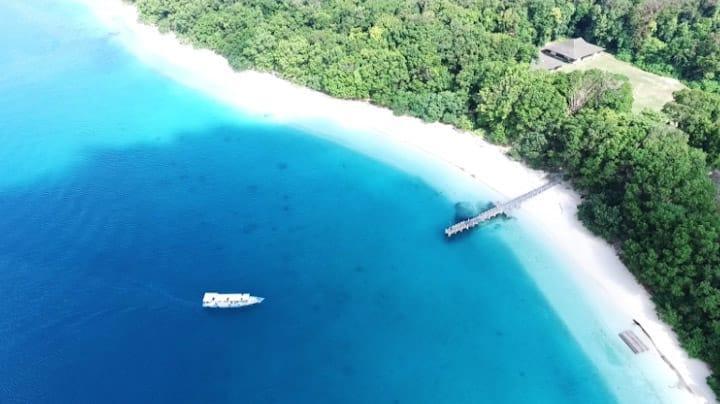
Famous for white powder sand beaches, crystal-clear turquoise waters, and calm swimming bays. Home to friendly wild barking deer (Muntjac) and long-tailed macaques roaming near eco-lodges.
Snorkeling Jungle Trek
Canoeing Expedition
Cigenter River (Handeuleum)
Paddle wooden canoes through tranquil Amazon-like mangrove forests along the Cigenter River. Keep an eye out for pythons, hornbills, and water monitors on overhanging branches.
Canoe Tour Mangrove Trail
Wildlife Savannah
Cidaon Grazing Field
Located opposite Peucang Island on the mainland peninsula. A lush open meadow where wild Banteng herds, peacocks, deer, and wild boars gather to graze at dawn and dusk.
Wildlife Spotting Photography
Historical Site
Tanjung Layar Lighthouse
Located on Java's westernmost cape. Features historic colonial Dutch lighthouse ruins, dramatic ocean waves crashing against rocky reefs, and sunset vantage points.
Colonial Ruins Sunset Spot
Distance & Travel Estimator
Calculate estimated travel time from major departure points to Ujung Kulon transit hubs
Estimated Travel Profile
~ 5 Hours 15 Mins
Distance: ~195 km Sea Transfer: None
Test Your Ujung Kulon Knowledge
Quick 3-question quiz on park history, fauna, and tips
1. Which critically endangered animal is Ujung Kulon National Park famous for saving?
2. In which year was Ujung Kulon declared a UNESCO World Heritage Site?
3. What is the main gateway port for boat trips to Peucang Island?
Wildlife Spotting Checklist
Tick off the species you spot during your trip to Ujung Kulon!